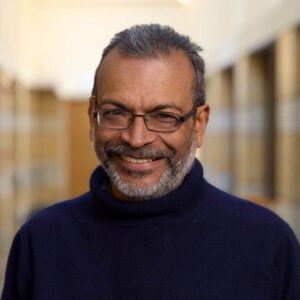
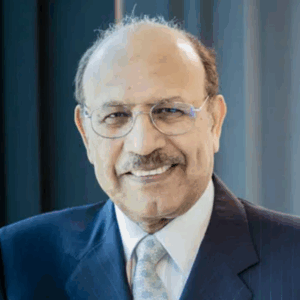
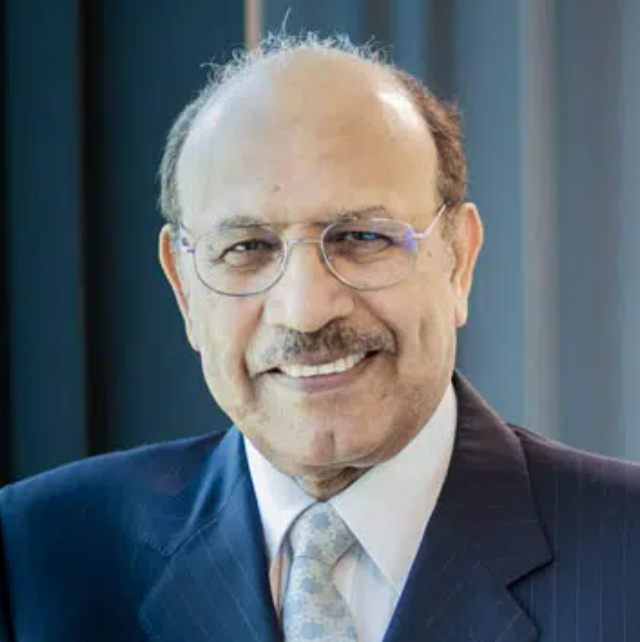
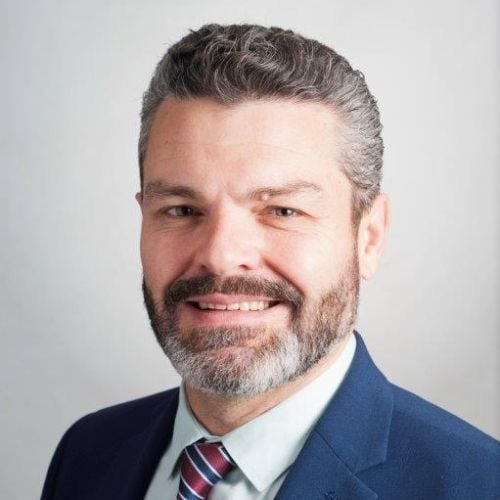
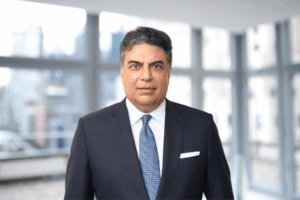
Alan Teixeira
Global Director of IFRS Research
Deloitte

Global Director of IFRS Research


Alex Flint is an expert on the convergence of politics and business, particularly related to energy and climate change. He is executive director of the Alliance for Market Solutions (AMS), a conservative nonprofit that engages directly with policymakers, the business community, and the media on policies that reduce carbon pollution and grow the economy. Previously, Alex led the Nuclear Energy Institute’s advocacy program as the senior vice president of governmental affairs for a decade. He began his career on Capitol Hill as a clerk on the Senate Committee on Appropriations and staff director of the Senate Committee on Energy and Natural Resources. Alex has been recognized as one of Washington’s top lobbyists, named one of the National Journal’s top 50 people changing Washington, and included on Washingtonian magazine’s list of most influential people in Washington.


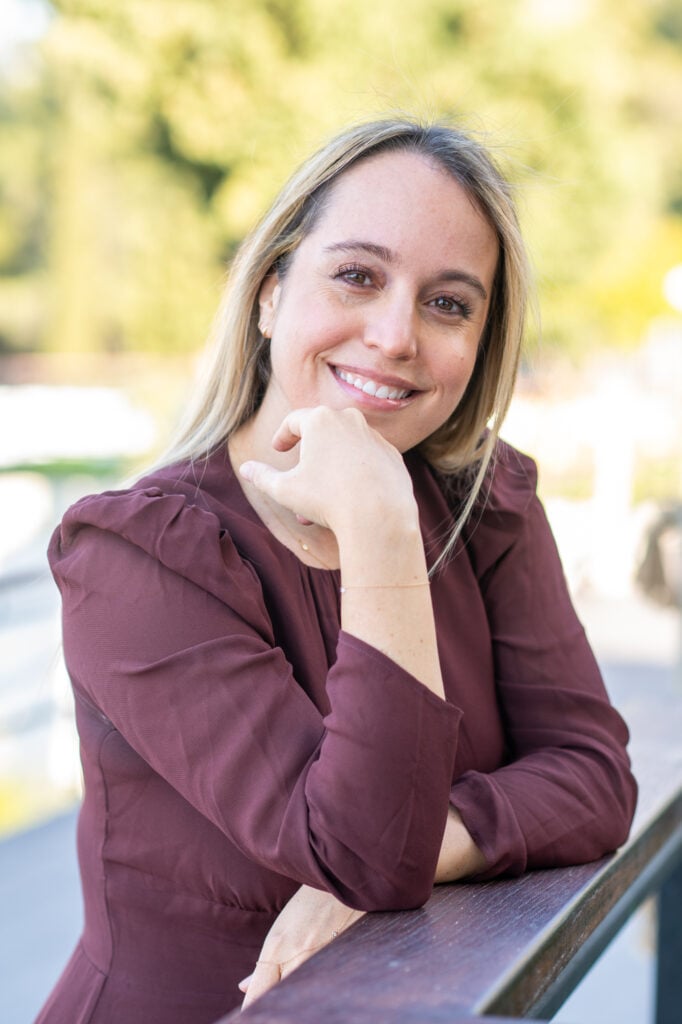
Alex Kruzel is an author, entrepreneur, business advisor, and leader of Telesto Strategy, a management consulting firm based in Chicago focused on integrating environmental security and sustainability into corporate strategy. Prior to founding Telesto, Alex has spent the past two decades advising the Fortune 500 and public sector clients globally. As a reflection of her commitment to service and her country, Alex served in the Peace Corps as an education volunteer in Southern Africa. Alex contributes to Chicago’s strong civic community through her efforts at the Chicago Council on Global Affairs as a member of its Board of Directors. As a mother, Alex is inspired by the inherent curiosity of children and is reminded of the need for generational thinking.


Dr. Bassen, a globally recognized academic and expert on corporate governance and sustainability reporting, is professor of Capital Markets and Management of the Faculty of Business, Economics and Social Sciences at the University of Hamburg. He serves as a member of the German Advisory Council of Global Change (WBGU) and the EU’s EFRAG Sustainability Reporting Board, as well as on several advisory committees on sustainable finance. Alex is also an Honorary Research Associate at the University of Oxford’s Smith School of Enterprise and the Environment, Visiting Professor at the Hong Kong Baptist University and the University of Reading.


Amir Amel-Zadeh is Associate Professor at Saïd Business School, University of Oxford. Amir’s research broadly investigates the capital market effects of financial and non-financial reporting and how companies’ sustainability characteristics affect investors’ asset allocation decisions. Prior to joining Saïd Business School, Amir held a position as Assistant Professor at Judge Business School, University of Cambridge, and prior to that worked at Lehman Brothers in London. He received his PhD in Finance from the University of Cambridge. He has taught or consulted for the financial services industry globally and was academic advisor to PanAgora Asset Management. Amir is member of the UK Endorsement Board, responsible for adopting IFRS for UK-listed companies.


Andrew Jones, PhD, is a Principal Researcher at The Conference Board Governance & Sustainability Center, where he leads research and thought leadership on corporate governance, sustainability, and corporate citizenship. His work focuses in particular on AI governance and oversight, sustainability and disclosure trends, board governance and effectiveness, DEI and corporate citizenship, and the wider legal, regulatory, and political shifts shaping how companies respond. He regularly advises senior executives and their teams, moderates and speaks at internal and external events, and comments in leading media outlets.


Dean Karolyi is a scholar in investment management specializing in international financial markets. He has published extensively in journals and has published several books. His research is featured in The Wall Street Journal, Financial Times, The Economist, Time, New York Times, among others. He leads executive education programs across the globe and is actively consulting with corporations, banks, investment firms, stock exchanges, and law firms. Karolyi serves as a Global Advisory Councilor for Accounting for Sustainability (A4S) and is the Chair of the UN’s Principles for Responsible Management Education (PRME). He has published extensively on the ways capital allocation, financial markets, and investor behavior can be harnessed to drive systemic change and accelerate progress on sustainability. Karolyi received his BA (Honors) in economics from McGill University and earned his MBA and PhD degrees in finance at the Booth School of Business of the University of Chicago.


Annita Florou is Professor of Accounting at Bocconi University and a member of the Sustainability Reporting Committee of the European Accounting Association. Prior to this, she held academic positions at London Business School, Queen Mary University of London and King’s College London. She has also been an Academic Advisor to the Institute of Chartered Accountants in England and Wales (ICAEW).
Currently, she is an Editor of Journal of Business, Finance and Accounting and an Editorial Board Member of other accounting journals. She has received research grants from several organizations and the European Union. Her research has been published in leading academic journals, including The Accounting Review and Review of Accounting Studies.


Anya Nakhmurina is an Associate Professor of Accounting at the Yale School of Management. She also holds a secondary appointment as an Associate Professor of the Environment at the Yale School of the Environment. Professor Nakhmurina studies the information environment of U.S. municipalities, with a focus on financial reporting transparency. She explores two interconnected topics: stewardship and the information roles of municipal disclosures. She is particularly interested in exploring cities’ disclosures to understand their decisions concerning climate change adaptation and mitigation. Her research has been published in prestigious journals, including Science, Journal of Accounting and Economics, Journal of Accounting Research, The Accounting Review, and Nature Communications Earth & Environment. Professor Nakhmurina is an Affiliate Fellow of the Stigler Center for the Study of the Economy and the State at the University of Chicago’s Booth School of Business and was a Junior Fellow of the Stigler Center during 2018–2021. She holds a PhD from the University of Chicago, an MA in Economics from the New Economic School, and an MS in Applied Mathematics and Physics from the Moscow Institute of Physics and Technology.


Barbara M Porco has served on the accounting faculty at Fordham University’s Gabelli School of Business for over twenty years, and currently serves as the Graduate School Dean and Managing Director of the Responsible Business Center. An award-winning educator, she has been recognized by the American Accounting Association and Poets & Quants. Barbara holds advanced credentials in sustainability, environmental management, and corporate innovation. She serves on the AICPA Assurance Services Executive Committee and the GHG Protocol Corporate Standard Technical Working Group. A former PwC Tax Director, she is also author of award-winning ethics materials and a McGraw-Hill sustainability reporting textbook.


I am an Associate Professor of Finance at Oregon State University, where I study issues at the intersection of information economics, corporate governance, and sustainable finance. My empirical research centers how the information environment and disclosure requirements shape the capital allocation and governance decisions of investors, firms, and regulators. I earned my Ph.D. in Finance from Penn State’s Smeal College of Business, and before academia I worked on the other side of these questions as an equity research analyst at Credit Suisse in New York City.


Chizoma Duru is an Economic Consulting Research Analyst at Cornerstone Research and a graduate of the University of Notre Dame, where she earned a degree in Econometrics and Quantitative Economics with minors in Sustainability and French. Her research explores the intersection of environmental economics, sustainable development, and public policy in Africa. At the ASW Conference, she will present her journal-accepted paper examining the effects of climate change on unemployment and migration across African countries. Chizoma is also the Co-Founder and COO of Mizoma Africa, a sustainable luxury fashion company promoting African manufacturing and entrepreneurship.


Chris Figee has more than 25 years of experience in the financial sector and has served as a member of the Board of Management of KPN and Chief Financial Officer since February 2020. Chris is also a member of the Supervisory Board of Royal Schiphol Group, the Supervisory Board of De Nederlandsche Bank, the Monitoring Commission Corporate Governance Code, the Economic Board Zuid-Holland and the Supervisory Board of Glaspoort.


Dianora Aria De Marco is a Managing Director in EY’s National Professional Practice Group, focusing on complex technical accounting matters and sustainability reporting requirements. Dianora was previously a Technical Fellow at the IFRS Foundation based in Frankfurt, Germany and served as a lead on the ISSB’s IFRS S1 and IFRS S2 workstream. She began her career at the FASB. Dianora is a certified public accountant in New York and New Jersey and is a member of the AICPA.


Dr. Donato Calace is the SVP Market Leader, Partnership & Innovation at Datamaran, where he spearheads global innovation projects and leads the firm’s business development, key accounts, and policy engagement strategy. With extensive experience in sustainability accounting, materiality, and policy Donato works with the sustainability leaders and the boards of many Fortune 500 corporations. He also actively contributes his expertise in technical committees and groups. He served as a member of the UK Financial Reporting Council Stakeholder Insight Group and the EFRAG Task Force on reporting of non-financial risks and opportunities, as well as the EFRAG Expert Working Group on the European Sustainability Reporting Standards (ESRS). He is regularly invited for guest lectures at top academic institutions, including Harvard and London Business School.
Having earned a Ph.D. in the Economics and Management of Natural Resources, Donato’s research and expertise encompass various aspects of his field. Donato has shared his findings at international academic conferences and published in top academic journals such as The Accounting Review as well as specialized reviews like Ethical Boardroom. His notable contributions include a widely downloaded definition of materiality featured in the Encyclopedia of the United Nations Sustainable Development Goals.


Douglas Eger is Chairman, CEO, and founder of Intrinsic Exchange Group (IEG), where he pioneered the Natural Asset Company (NAC) model to bring the full value of nature into the global economy and advance solutions for biodiversity loss and climate change. NACs are a new type of company structured to restore and grow the value of natural assets through long-term stewardship and regenerative management. This builds on an accomplished career founding, building, and leading companies across finance, technology, healthcare, and media. Douglas has also produced Academy Award-nominated and Emmy-winning documentaries, and preserved nearly 7,000 acres of land through conservation partnerships.


Gunther Glenk is an Assistant Professor of Business Administration at the University of Mannheim. His research examines the measurement and management of corporate performance in the transition to a decarbonized economy. Topics include the integrated accounting for corporate and product emissions, the cost of meeting voluntary carbon pledges or environmental regulations, and the competitiveness of climate technologies in firms’ investment decisions. He received his doctorate from the Technical University of Munich and held visiting and fellowship positions at Harvard Business School, Stanford Graduate School of Business, and Duke University’s Fuqua School of Business.


Hai Lu is the McCutcheon Professor in International Business and Professor of Accounting at the Rotman School of Management, University of Toronto. He is also a Guest Chair Professor at the Guanghua School of Management, Peking University. His research focuses on securities valuation, corporate governance, carbon emissions and sustainability, and the Chinese capital market. Professor Lu is the President-Elect of the Canadian Academic Accounting Association (CAAA). He serves as an Editor of the Journal of Business Finance & Accounting and Accountability in a Sustainable World Quarterly. He previously served as an Editor of Contemporary Accounting Research from 2017 to 2025.


Jan’s research focuses on how performance metrics and targets help firms in achieving their objectives in the long run. He also examines how audits help firms to attest the credibility of their reports. His work is published in the top-tier accounting journals. Jan is department editor of accounting at Management Science and has recently established the Journal Accountability in a Sustainable World Quarterly together with Peter Easton, Robert Knechel and Shiva Rajgopal. He writes editorials for the Dutch national newspapers and Financial Times.


Dr Jeremy Osborn FCMA, CGMA, FCPA (Aust.) Jeremy is an accounting iconoclast with deep experience of how sustainability catalyses systems change. Jeremy is AICPA & CIMA’s Vice President of Management Accounting Innovation, Research and Development, enabling sustainable business models and long-term value creation through the Association’s members, candidates and registrants in 188 countries and territories. Previously, Jeremy worked for the Value Reporting Foundation and the International Integrated Reporting Council to support the scaling and global adoption of sustainability accounting, integrated reporting and integrated thinking amongst a wide variety of stakeholders. Jeremy has also worked for EY, Accounting for Sustainability (founded by HM King Charles III), Accenture and Unilever, advising organizations across a wide range of industries on how to integrate sustainability into their business model, operations, value chain, decision making and reporting.


Jingdan Tan is an Assistant Professor in Accounting in the School of Accounting and Finance at The Hong Kong Polytechnic University. Jingdan earned her Ph.D. in Accounting from Nanyang Business School, Nanyang Technological University at Singapore. Jingdan’s research interest lies in financial archival studies, with a special focus on corporate ESG practices, financial reporting and corporate disclosure, and corporate governance.


J.R. Rickertsen is responsible for coordinating the delivery of the bank’s global corporate banking platform for global integrated majors and state owned oil companies, select internationally-focused large cap energy companies, and the emerging renewable fuels value chain. That platform includes debt capital markets, lending, leasing, rates, currencies and commodities markets, cash management, and escrow.
J.R. joined Bank of America as a Director in January 2013 after eleven years at Citi, where he had several Energy and Power Global Corporate Banking roles in Houston, Moscow, London, and New York. J.R. has worked with client relationships spanning nearly 100 countries. J.R. graduated from Georgetown University with a B.S. in Foreign Service, International Economics with a concentration in Russian and Eastern European studies. He is a member of the capital formation committee for the Houston Energy Transition Initiative (HETI), an effort by the Greater Houston Partnership to attract energy transition investment and talent to the Houston metro area.


Jyoti is a partner at Deloitte Africa, Johannesburg, specialising in sustainability assurance and reporting. She is a qualified chartered accountant with 24 years of experience in the accounting and auditing profession. Her past 15 years has been focussed providing sustainability assurance and advisory services to a cross sector of clients and industries. Her objective is to enhance credibility to client’s business and related processes, through applying her technical assurance practical l knowledge and skills to ensure that quality is maintained balanced with best practice insights.


Karl is the Executive Director of EngagedX, specialising in consultancy, advocacy, policy work, and innovation in sustainability, including ESG finance, and impact investing. His role includes leading iSumio, the software development studio of EngagedX that builds data-driven technology solutions. He works internationally across private, public, and philanthropic sectors. Karl lectures part-time at the Frankfurt School of Finance and Management where he is responsible for the executive education course: Certified Expert in ESG and Impact investing. His in-person lectures focus on the challenges and opportunities in ESG data and ‘next-generation’ emissions accounting methods.


Karthik Ramanna is Professor of Business and Public Policy at the University of Oxford’s Blavatnik School of Government and a fellow at St John’s College. He teaches at the Blavatnik School on managing organisations in polarised times, which led to his 2024 book The Age of Outrage. An expert on business-government relations, sustainable capitalism, and corporate reporting and auditing, Professor Ramanna studies how organisations and leaders build trust with stakeholders. His scholarship has won numerous awards, including the Journal of Accounting and Economics Best Paper Prize, the Harvard Business Review McKinsey Award for “groundbreaking management thinking,” and three times the international Case Centre’s prizes for “outstanding case-writing,” dubbed by the Financial Times as “the business school Oscars.” Professor Ramanna established the Case Centre on Public Leadership and the Transformational Leadership Fellowship at the School, the latter a bespoke, by-invitation programme for senior leaders looking to reimagine their public-service impact. In 2022, he co-founded the non-profit E-liability Institute, where he serves as principal investigator, with a mission to drive decarbonisation processes through rigorous GHG accounting. From 2016 to 2023, he was director of the Blavatnik School’s Master of Public Policy programme that has educated over a thousand public leaders from about 120 countries. From July 2023 to April 2025, Professor Ramanna was on partial public-service leave from Oxford to advise the US Public Company Accounting Oversight Board, an “auditor of auditors” in global markets. Previously, Professor Ramanna taught at the Harvard Business School in both the MBA and senior executive-education programmes. He has a doctorate from MIT’s Sloan School of Management. He lives in Oxford with his husband, Jon, and they enjoy dinner parties and touring Caravaggios.


Katharina Weiß is an Assistant Professor at LMU Munich School of Management. Her research focuses on financial and sustainability disclosures and reporting, the role of regulation, firms’ responses to regulatory changes, and how these developments affect capital markets, such as financial analysts. Her research draws on textual analysis, machine learning, and AI-based tools, complemented by interview-based research. Her work has been presented at prominent accounting conferences and workshops in the U.S. and internationally.


Kerstin Lopatta serves as Chair of the EFRAG Sustainability Reporting Board since May 2026. She is Professor of Financial Accounting, Auditing and Sustainability at the University of Hamburg, Adjunct Professor at the University of Luxembourg, and Visiting Professor at City University of Hong Kong. A recognised expert in sustainability reporting and financial accounting, she has contributed to the development and implementation of sustainability disclosure standards and climate reporting initiatives. Her research focuses on the impact of environmental, social and governance (ESG) factors and corporate governance. She also serves on the supervisory boards of HSBC Continental Europe, Freenet AG and Eurokai GmbH & Co. KGaA.


Khrystyna Bochkay is an Associate Professor of Accounting at the University of Miami (UM) and serves as an Academic Advisor to the technical staff at the International Sustainability Standards Board (ISSB), part of the IFRS Foundation. Her research interests include financial and sustainability reporting, capital markets, forecasting, investor behavior, textual analysis, machine learning, and artificial intelligence. Recently, Bochkay has focused on examining companies’ voluntary adoption of sustainability standards and assessing the current state of sustainability reporting practices. Bochkay’s research has been published in leading academic journals, including The Accounting Review, Journal of Accounting Research, Review of Accounting Studies, Contemporary Accounting Research, Journal of Accounting, Auditing, and Finance, and Foundations and Trends in Accounting. Her work has been presented at prominent accounting conferences and workshops both in the U.S. and internationally, and has been featured in various media articles, industry reports, and podcasts.


Lisa Yao Liu is an Associate Professor of Accounting at Columbia Business School and an Affiliate Fellow of the Stigler Center for the Study of the Economy and the State at the University of Chicago Booth School of Business. Her research examines whether auditing, disclosure regulation, and information technology create real accountability for outcomes including workplace safety, cybersecurity, and environmental performance. Her work has been published in the Journal of Accounting and Economics, the Journal of Accounting Research, and Management Science, and has received the Distinguished Contribution to Accounting Literature Award from the American Accounting Association. She serves on the editorial boards of The Accounting Review and Contemporary Accounting Research, and engages with regulators and standard-setters on disclosure policy.


Marc Siegel is an Executive in Residence at Fordham University’s Gabelli School of Business, where he supports programs focused on corporate reporting, sustainability, and responsible business. He is also co-founder of Metrix Advisory, advising companies, boards, and investors on complex accounting, reporting, regulatory, and governance matters. Marc previously served as a member of the Financial Accounting Standards Board and the Sustainability Accounting Standards Board and held senior leadership roles at PwC and EY.


Marcus Looijenga is a partner in sustainability assurance at PwC. He has been active in this field for over 10 years. Marcus is a certified auditor and has been a university lecturer in the field of auditing and sustainability assurance. He is now based in Amsterdam, and is primarily focused on providing sustainability assurance to the largest listed companies in the Netherlands, including larger front runners in sustainability reporting. |


Mary Johnstone-Louis is Senior Fellow in Management Practice at the University of Oxford’s Saïd Business School, a regular contributor to Forbes.com and co-author of The Financial Times Guide to Sustainable Business. She is a Fellow and Advisory Board Member at Oxford’s Skoll Centre, a Senior Associate of Oxford Net Zero, and Academic Director of the Oxford Sustainable Business Programme. She has served as Chair of B Lab UK, board member of Blueprint for Better Business, and Senior Fellow at the Business Fights Poverty Institute and as an advisor to several impact-focused businesses in the UK and Europe.


Max is a Professor at the University of Cologne and co-founder of the Sustainability Reporting Navigator, a platform dedicated to analyzing the adoption of sustainability reporting standards. He is also an Affiliated Faculty Member of the ESMT Institute for Sustainable Transformation, a Principal Investigator in the DFG-funded Collaborative Research Centre Accounting for Transparency, and a member of the Cluster of Excellence ECONtribute: Markets & Public Policy. Max has collaborated extensively with industry and policy stakeholders, including through studies on ESG reporting readiness and work with organizations in ESG and quantitative asset management. He is also a member of DHL Group’s Sustainability Advisory Council and the Working Group on Corporate Reporting at the Schmalenbach-Gesellschaft für Betriebswirtschaft e.V.


Mikael Homanen is responsible for Business Development and Research Partnerships at Upright, working with organizations and researchers to advance the use of science-based data in understanding companies’ real-world impacts. Previously, he worked at the Principles for Responsible Investment (PRI), focusing on research and data in responsible investment. Mikael has a background in academia and continues to engage with the academic community as a visiting lecturer. His work sits at the intersection of sustainability, finance, and research, with a particular interest in connecting academic insights and on-the-ground evidence with practical applications for investors, companies, and decision-makers globally.


Mohan Venkatachalam is the R.J. Reynolds Professor of Business Administration at Duke University’s Fuqua School of Business. He has published research papers on a wide range of topics in valuation, verbal and nonverbal communication, nonfinancial performance measures, accounting disclosures, derivatives, and corporate governance. His teaching spans topics including Financial Accounting, Financial Analysis, Equity Valuation, and Executive Compensation. He is the Senior Editor of the Accounting Review and has served on the Editorial Boards of The Accounting Review, Review of Accounting Studies, and Contemporary Accounting Research.


Paolo Perego is Professor of Accounting and Program Director of the MSc Accounting & Finance at the Free University of Bolzano (Italy). He is a graduate of Bocconi University and EPFL, and he received his Ph.D. at Radboud University Nijmegen (NL).His research and teaching interests include managerial accounting, performance measurement and control systems, sustainability accounting and assurance, and Integrated Reporting. He has published, among others, in Accounting, Organizations and Society, European Accounting Review, Auditing: a Journal of Practice and Theory, Accounting Horizons, Journal of Accounting and Public Policy, Journal of Business Ethics, and Journal of Management Studies. He is Associate Editor of the Journal of Accounting and Public Policy.


Griffin’s recent publications focus on the consequences of greenhouse gas emissions and firms’ responses to them. He also investigates the impact of extreme weather on company disclosures and stock returns. His latest papers show that disclosure regulation and conflicting stakeholder preferences can affect sustainability outcomes. Griffin collaborates with researchers in Asia, Europe, New Zealand, and North America. In addition to his publications, he regularly presents his work at seminars and has served as a keynote speaker at international conferences.


Professor Easton’s expertise in accounting and valuation is widely recognized by the academic research community and by the legal community. Professor Easton has been qualified as an expert witness in the Delaware Chancery Court and he has consulted on valuation issues for investment firms and accounting firms in Australia, the UK, and the USA.
Professor Easton holds undergraduate degrees from the University of Adelaide and the University of South Australia. He holds a graduate degree from the University of New England and a PhD in Business Administration (majoring in accounting and finance) from the University of California, Berkeley.
Professor Easton’s research on corporate valuation has been published in the Journal of Accounting and Economics, Journal of Accounting Research, The Accounting Review, Contemporary Accounting Research, Review of Accounting Studies, and Journal of Business Finance and Accounting. Professor Easton has served as an Associate Editor for 11 leading accounting journals and is currently an Associate Editor for the Journal of Accounting Research, Contemporary Accounting Research, Journal of Business Finance and Accounting, and Journal of Accounting, Auditing, and Finance. He is an Editor of the Review of Accounting Studies.
Professor Easton has held appointments at the University of Chicago, the University of California at Berkeley, Ohio State University, Macquarie University, the Australian Graduate School of Management, the University of Melbourne, and Nyenrode University. He is a member of the Scientific Council of CentER, Tilburg University and is the recipient of numerous awards for excellence in teaching and in research. Professor Easton regularly teaches accounting analysis and security valuation to MBAs.
He, together with John Wilde, Mary Lea McAnally, and Robert Halsey, is author of “Financial Accounting for MBAs,” now in its sixth publication; “Financial & Managerial Accounting for MBAs,” authored with Robert Halsey, Mary Lea McAnally, Al Hartgraves and Wayne Morse is in its fourth edition; “Financial Statement Analysis and Valuation,” authored with Mary Lea McAnally, Patricia Fairfield, Xiao-Jun Zhang and Robert Halsey is currently in its third edition; and “Estimating the Cost of Capital Implied by Market Prices and Accounting Data,” was published in Foundations and Trends in Accounting in 2009. He is one of the founding editors of Accountability in a Sustainable World Quarterly.


Peter Schwartzstein is an environmental journalist and researcher, who focuses on water, food security, and especially the conflict-climate nexus. He’s a fellow at the Stimson Center, a fellow at the Center for Climate and Security, and a TED fellow. Based between Jordan and Greece, he consults for a range of governments and iNGOs. He is the author of ‘The Heat and the Fury: On the Frontlines of Climate Violence.’


Rebekah Smith leads IBM’s Global Regulatory Compliance team, which manages a process for monitoring emerging regulations, conducting scoping assessments, legal analysis and supporting compliance readiness for emerging laws that broadly impact IBM. The team covers Privacy, AI and Data Governance, Cybersecurity, and ESG regulations. Rebekah has 20 years experience in EU public affairs and advocacy, with specific expertise on workforce and ESG topics. Before joining IBM, she was Deputy Director for Social Affairs for the most prominent EU business association, BusinessEurope. Previously she was Policy and Communications Manager for smallbusinesseurope, a consultancy supporting UK small businesses with EU intelligence and advocacy. She has a joint Masters Degree in European Studies from Hull University in the UK and Osnabrueck University in Germany.


Board Member, ISSB. Professor of Accounting, Oxford University.


Robert Eccles if the world’s foremost expert on integrated reporting and a leader on how companies and investors can create sustainable strategies. He was previously a tenured Professor and Professor of Management Practice at Harvard Business School. Bob is the Founding Chairman of the Sustainability Accounting Standards Board (SASB) and one of the founder of the International Integrated Reporting Council (IIRC). He has recently joined the board of Mistra Centre for Sustainable Markets (MISUM) in Sweden. Bob is also on the Advisory Board of the HANA Impact Capital Fund. In 2011, Bob was selected as on of the Top 100 Thought Leaders in Trustworthy Business Behavior for his extensive positive contribution to building trust in business, and in 2014 and 2015 he was named as one of the 100 Most Influential People in Business Ethics. He is also an Honorary Fellow of the Association of Chartered Certified Accountants (ACCA). Bob is the award-winning author of a dozen books, including seminal works on integrated reporting, sustainability, and the role of business in society. A prolific writer for both academic and non-academic audiences, he has his own column on Forbes.com. Bob has dedicated his career to turning theory into practice. One of his most significant efforts is “the Statement of Significant Audiences and Materiality Campaign” in collaboration with the American Bar Association’s Task Force of Sustainable Development, the UN-backed Principles for Responsible Investment, and the UN Global Compact. The goal is the help make sustainability core to both companies and investors. Bob received an SB in Mathematics and an SB in Humanities and Science from MIT and an AM and a PhD in Sociology from Harvard University.


Robert S. Kaplan, Senior Fellow and Professor, Emeritus, joined Harvard Business School in 1984 after serving as dean of Carnegie-Mellon’s Tepper School. Kaplan has co-developed activity-based costing, the Balanced Scorecard, and E-liability carbon accounting. He now applies these innovations to value-based health care, accounting for corporate GHG emissions (with Karthik Ramanna), and corporate inclusive growth strategies for triple bottom line performance.
Kaplan has BS/MS degrees in Electrical Engineering from MIT, a Ph.D. in Operations Research from Cornell, and four honorary doctorates. He is a member of the Accounting Hall of Fame.


W. Robert Knechel, PhD is a Distinguished Professor and the Frederick E. Fisher Eminent Scholar in Accounting at the University of Florida. He is the Director of the International Accounting and Auditing Center (IAAC). Robert holds an appointment at the University of Auckland as a Professor of Accounting Research. He recently completed a 10-year term as a founding Board member of the Foundation for Audit Research in the Netherlands and has served as a member of the Standards and Emerging Issues Advisory Group (SEIAG) of the Public Company Accounting Oversight Board (PCAOB). He is co-founding Editor of Accountability in a Sustainable World Quarterly, has recently completed a term as the Senior Editor for The Accounting Review.


Roger Simnett is a Professor at Monash University and an Emeritus Professor at UNSW Sydney. He has over 25 years background in international standard setting, including being an International Auditing and Assurance Standards Board member (2002-2005, 2019-2021), and Chair and CEO of the Australian Auditing and Assurance Standards Board (2017-2020). He researches extensively in audit and assurance and has numerous refereed and professional publications. In 2018 he was awarded the Order of Australia for service to the accounting profession and education and in 2019 was elected to the Australian Accounting Hall of Fame. He is also a Fellow of CPA Australia and the Academy of Social Sciences.


Sergey is an executive level leader with 18+ years’ experience in operations, sustainability, supply chain and business development. Multicultural and multilingual, his career has spanned North America, Europe, Middle East and Central Asia in the energy, consulting, education and IT industries.


Shiva Rajgopal is the Roy Bernard Kester and T.W. Byrnes Professor of Accounting and Auditing at Columbia Business School. He has also been a faculty member at the Duke University, Emory University and the University of Washington. Professor Rajgopal’s research interests span financial reporting, earnings quality, fraud, executive compensation and corporate culture. His research is frequently cited in the popular press, including The Wall Street Journal, The New York Times, Bloomberg, Fortune, Forbes, Financial Times, Business Week, and the Economist. He teaches fundamental analysis of financial statements for investors, managers and entrepreneurs and a PhD seminar on accounting regulation. Key awards include 2006 and 2016 American Accounting Association (AAA) Notable Contribution to the Literature award, 2006 and 2016 Graham and Dodd Scroll Prize given by the Financial Analysts Journal, and the 2008, 2012 and 2015 Glen McLaughlin Award for Research in Accounting Ethics. He is the Departmental Editor of the Accounting track of Management Science. He is also an Associate Editor at the Journal of Accounting and Economics and an ex-editor at Contemporary Accounting Research. He was on the editorial board of The Accounting Review from 2003-2011.


Soh Young In is a Professor at the Korea Advanced Institute of Science and Technology (KAIST). Her research integrates technology, finance, and policy to accelerate the transition toward low-carbon, climate-resilient infrastructure, developing frameworks that measure how climate risk affects infrastructure assets and investment portfolios. She is a recipient of the UNEP Finance Initiative Research Award and the U.S. Department of Energy’s Clean Energy Education & Empowerment Award. She advises the Korean government on climate and economic policy, serving on advisory committees for the Ministry of Planning and Budget, the Ministry of Finance and Economy, and the Presidential Commission on Carbon Neutrality and Green Growth. Before joining KAIST, she led financial innovation research at Stanford University’s Sustainable Finance Initiative.


Sonja leads the IIF’s work on sovereign debt policy and sustainable finance, focusing on research and advocacy for the Institute’s global membership across the financial services industry. Her research interests include global debt markets and risks to financial stability; sovereign debt stress and debt restructuring; the economic impact and financial market pricing of climate and environmental risks; and capital markets development in emerging markets. Her policy work on behalf of the IIF includes outreach and liaison efforts vis-à-vis the G20/G7, the Paris Club, the IMF/World Bank and other multilaterals, global regulators and standard setters, and the Central Banks and Supervisors Network for Greening the Financial System (NGFS). She also serves on the boards of the Integrity Council for the Voluntary Carbon Market (IC-VCM).


Stefan is known internationally for his research at the intersection of economics and management accounting. At the University of Mannheim, his research team has examined the economics of decarbonization in the context of multiple emerging climate technologies. His most recent research has focused on corporate net zero pledges and corporate carbon reporting. Stefan’s findings have been published consistently in leading management and science journals.


Prior to joining AccountAbility, Sunny served as Global Managing Partner of PwC’s Sustainability Advisory business, where he advised clients on Sustainability, ESG, Governance, Risk, and Enterprise Transformation. Earlier, he was Global Strategy Leader for PwC’s Assurance and Business Advisory Services – the firm’s accounting, risk management, and consulting operations, worldwide. Over the course of his career, Mr. Misser has partnered with CEOs, Boards, and Senior Executives at many of the world’s leading organizations to co-create strategy, programs, and governance frameworks that drive business performance and long-term value. These include Microsoft, Walmart, American Express, UBS, Citigroup, Credit Suisse, Saudi National Bank (SNB), Riyad Bank, Merck, Pfizer, Bayer, Nestlé, Shell, and Saudi Aramco, as well as global multilateral institutions such as the World Economic Forum, International Monetary Fund (IMF), and the United Nations. His work advances corporate strategy and improves performance, enabling organizations to navigate complex global challenges and advance responsible business practices. Mr. Misser serves on multiple advisory boards, including the Cardinal’s Committee for Charity, an initiative of Catholic Charities of the Archdiocese of New York. He also serves on the Dean’s Advisory Board of Lehigh University’s College of Engineering & Applied Science and has been recognized as Distinguished Alumni for Excellence in Industry by Lehigh University. He also served on the advisory board of E-Business @ MIT and the advisory board for Innovation and Corporate Responsibility at MIT/Sloan. Mr. Misser currently serves on the Board of Visitors of the Colin Powell School for Civic and Global Leadership at the City College of New York, where he helped establish the AccountAbility Sustainability “S Lab,” a collaboration focused on developing the next generation of sustainability leaders. Mr. Misser holds a Master of Science in Management from the MIT Sloan School of Management (Sloan Fellows Program), a Master of Science in Industrial Engineering from Lehigh University, and a Bachelor of Science in Mechanical Engineering from M.S. University. He is often quoted in media such as Fortune, Forbes, Financial Times, The Economist, New York Stock Exchange Quarterly, Dow Jones Interactive, Capital Finance International (CFI.co), Global Finance, Internal Auditor’s Magazine, and The New York Times.


Since May 2025 Dr. Thomas Becker is Vice President of External Affairs and Sustainability combining the previous two departments which he has built up over the last years. He was Vice President for Sustainability and Mobility from October 2019 to April 2025, where he integrated sustainability into corporate strategy, including defining the implementation of the objectives of the Paris Climate Agreement at corporate level, the Group’s strategic approach to circular economy and the role of individual mobility in the urban environment. From 2007 to September 2019, he was Vice President for Government and External Affairs, overseeing the representation of BMW’s political interests and sustainability communication. Dr. Becker began his career at the Association of the German Industry (BDI) and held leadership roles at the Association of the Automotive Industry (VDA). He earned his PhD with magna cum laude from the University of Witten/Herdecke and holds a diploma in economics from the University of Cologne.



Thorsten Sellhorn is Professor of Financial Accounting and Auditing at Ludwig Maximilian University (LMU) Munich. His research examines sustainability disclosure, financial accounting, and auditing, with a particular focus on how transparency shapes corporate behavior and capital markets. His work has been published in leading accounting journals, including Journal of Accounting Research, The Accounting Review, Management Science, Review of Accounting Studies, and European Accounting Review. He currently serves on several international advisory bodies on corporate reporting and sustainability standards and is leading research on the effects of mandatory sustainability reporting. He is a past president of the European Accounting Association.


A retired Big 4 partner and global lead of the firm’s fraud risk management services, he has held leadership roles as Past Chairman of the Connecticut Society of CPAs and serves as Chair of the Governance Committee of the Natural Asset Accounting Standards Board. He is also co-author of several McGraw-Hill books on sustainability reporting, regulatory enforcement, and fraud risk management.


Tim Youmans is an independent Senior Investment Stewardship Advisor whose work sits at the institutional intersection connecting investors and companies on long-horizon questions. His background is in investment stewardship and corporate governance, with substantive depth in the mechanisms that align capital with sustainable value creation. He is a long-time collaborator of Prof. Robert G. Eccles, whom he first worked with as a doctoral student at Harvard Business School and then as a full-time HBS research scholar for three years. Their fifteen-plus-year collaboration has produced multiple co-authored scholarly articles at the intersection of stewardship, corporate reporting, and climate policy.


Ulf is Principal Advisor in the DG Data and Statistics in the Deutsche Bundesbank, responsible for topics in research, statistical concepts and international relations. He has a research background and recently, his work is focussing on GHG emission accounting. He is a current or former member of Scope 3 Technical Working Group of the Greenhouse Gas Protocol, the technical working group supporting the development of the E-Liability proto-standard for carbon accounting, the G20 Data Gaps Initiative Task Team, the NGFS Expert Network Research and the ESCB Statistics Committee Expert Group on Climate Change Statistics. Ulf lives in Frankfurt, Germany, with his wife and two daughters.


Victor Wagner is an Assistant Professor of Accounting at the Stockholm School of Economics. His research focuses on the evolution of the sustainability reporting environment where he employs quantitative (e.g., archival, experimental) and qualitative (e.g., interviews) methods. He co-founded the Sustainability Reporting Navigator, an open science platform for sustainability reporting. He holds a Ph.D. in Accounting from LMU Munich and was a visiting scholar at the universities of Amsterdam and Chicago.


Dr. William W. Xiong is an Assistant Professor of Finance at the Binghamton University (SUNY) School of Management. His recent research focuses on investments, sustainable and biodiversity finance, private capital, and applications of new technologies in finance. His broader research interests span a range of contemporary issues in financial economics. He earned his Ph.D. in finance from Cornell University.


Wim Bartels works in sustainability reporting and assurance since 2003. He is currently a partner with Deloitte for their European organisation. He has worked with over 50 multinational, listed companies across Europe and has worked globally. Over the past years he has focused on serving global clients in implementing reporting regulations, conducting materiality assessments and assessing the strategic implications. Wim has been a member of the Task force on Climate-related Financial Disclosures since its in inception in 2016 till December 2021. Currently he serves as the Chair of the Sustainability Policy Group of Accountancy Europe. He is a member of the EFRAG Sustainability Reporting Board.

This website uses cookies to ensure you get the best experience on our website. By using our site, you are agreeing to our use of cookies.